Friday, 11 April 2014

The Three C's of Credit

The Three C's of Credit
  •  Capacity--Can you repay the
The Three C's of Credit
credit you're granted? What's your
income?
  •  Character--Will you repay the
credit you're granted? What's your
previous track record?
  • Collateral--Is there tangible
Your credit is determined on the
basis of your:
♦ Credit application
♦ Credit report
♦ Credit score
                                             
property that can secure the credit
extended?
Caution: Don't rely on credit to
cover your normal living
expenses. If you're using credit
to pay for normal living
expenses, it should be because
it's convenient to do so--not
because you don't have those
expenses planned for in your
budget.
The Three C's of Credit
Debt
Types of debt
♦ Secured--Backed up by a lien on collateral.
Examples include a mortgage, a car loan, or a
credit card secured by a bank deposit.
♦ Unsecured--Not collateralized. Examples
include personal installment loans, student
loans, and most credit cards.


Important considerations
♦ Amount--The larger the amount you borrow, the larger your
monthly payment.
♦ Term--The length of time you have to repay the loan. Longer terms
may mean lower monthly payments but larger total interest charges.
♦ Rate--The higher the rate, the greater the total interest charge.

Source : Kramer Financial


Risk Management with Insurance

Risk Management with Insurance

Another important part of financial planning is identifying and managing the
potential risks that can impact your finances. The value of insurance is that it's a
cost-effective way to mitigate or share the potentially overwhelming cost of
various risks.
Risk Management with Insurance

♦ Health Insurance -- Most plans provide
basic coverage for common medical expenses,
such as doctor visits, preventive care,
diagnostic tests, hospital and extended care,
emergency services, and prescription drugs.
♦ Auto Insurance -- Liability insurance
provides compensation to persons who would
be able to sue you. Property damage insurance
includes collision and comprehensive coverage.
♦ Life Insurance -- Income replacement to
your survivors. It provides an income tax-free
death benefit, and can be used to pay for funeral expenses and even medical
expenses of a last illness.
♦ Property Insurance -- Covers a variety of risks that can cause
damage to your home and personal property, medical payments for injuries
to occupants and to other persons injured by accident while in your home,
and loss or theft of personal property.
♦ Liability Insurance -- A last line of defense against potentially
devastating claims for things over which you may have little or no control. It's
often called umbrella insurance because it's carried over all other liability
insurance and usually adds $1,000,000 or more in extra coverage to your
homeowners and automobile liability policies.
♦ Disability Insurance -- In the event you are out of work due to an
injury or illness, disability income insurance benefits can be used to preserve
your independence, maintain your lifestyle, give you time to recover, provide
a chance to retrain for another job if necessary, and conserve your assets
and savings for you and your family.
♦ Long-Term Care Insurance -- Private insurance that pays benefits if
you need extended care, such as nursing home care. Long-term care
insurance protects you against a specific financial risk--in this case, the
chance that the need for long-term care will wipe out your life savings.

Source : Kramer Financial


An Emergency Fund

An Emergency Fund
 An Emergency Fund
 An emergency fund--money that's
readily available to meet unexpected
expenses--is really the foundation for
any successful financial plan. Without
money to fall back on when an
unexpected expense crops up, you
may be forced to tap into savings that
you've earmarked for retirement,
college, or another savings goal. But if
you have an emergency fund, it will be
much easier to handle a job loss, a
temporary disability, or some other
event that might prevent you from
saving for the future or even tempt you
to pile up debt.
How much is enough?
http://efinancialplanning.blogspot.com/2014/04/an-emergency-fund.html
insurance? Do you have other assets that you could tap without penalty in an emergency?
Where you keep your emergency fund is also important. In a jar is probably not the best idea. You'll want to keep your money in an account where it's readily available, but you'll also want to receive as high a return as possible. Rarely do you write one check equal to six months or even three months worth of expenses, so you may only need part of the fund in something as liquid
as a savings or checking account.
The balance of the emergency fund can be held in something with the potential to  achieve a higher return, but that you can still
access in a day or two.

http://efinancialplanning.blogspot.com/2014/04/an-emergency-fund.html
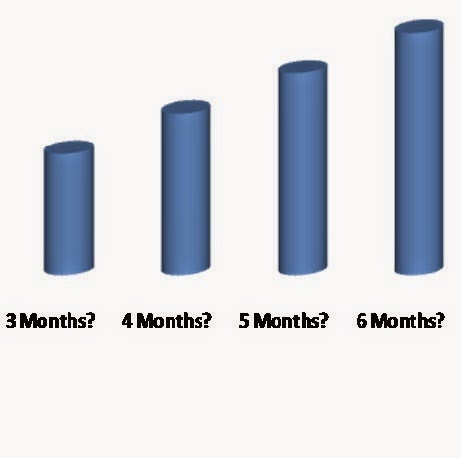
A popular rule of thumb is that you should have an emergency fund equal to three to six months of your living expenses. But should you save three months, four months, five months, or
six months worth of your expenses?
The amount you should have depends on many factors. How stable is your income? Do you work in an industry
where layoffs are common, or are you
in a growing field? Do you have
adequate health and disability


Budgeting

The first part of putting any financial plan into action requires you to control your
flow of money. A budget tracks your income and expenses, and helps you direct

http://efinancialplanning.blogspot.com/2014/04/budgeting.html

the flow in the way you want it to go.
To construct a budget, first account for
all your income. This includes your
paycheck, plus any income you might
have from other sources such as
rental income or government benefits,
interest on money you have in the
bank, or investment income.
From that, you'll need to subtract your
expenses. Expenses can be broken
down into two categories. Fixed expenses
are those you have to pay,
such as rent or a mortgage payment,
car payments and insurance, utilities,
groceries, and clothing. Discretionary
expenses are more optional items,
such as eating out, entertainment,
gifts, and vacations.

INCOME
1. Paycheck
2. Rental income
3. Government benefits
4. Interest
5. Investment income
▬ EXPENSES
1. Fixed expenses
2. Discretionary expenses
═ SURPLUS/DEFICIT

Now, subtract your average expenses
for a given period (a month or year)
from your income for the same period.
Is there a positive number left over?
That's good; you're "in the black" or
running a surplus. A surplus can be converted into savings or an investment for
the future.

http://efinancialplanning.blogspot.com/2014/04/budgeting.html
But if you get a negative number, that's bad;
you're "in the red" or running a deficit. You're
spending more than you're making. The only
thing that's going to change that equation is
either increasing your income or decreasing
your expenses (and it's the discretionary
expenses--the "fun stuff"--that are easiest to
reduce)--or both.
So, let's look on the bright side: you're running
a surplus. One of the first things you want to do
with that surplus is create an emergency fund


Setting Your Goals

Setting Your Goals
Setting Your Goals

When you set goals, you're defining your
dreams for the future. Some of your goals
may be things that you want soon, like paying
off your credit card debt or buying a new car.
Other goals may be more distant. Do you
want to buy or build a new home? Start your
own business? Pay for college for your child
or grandchild? Retire early?
Your goals are the foundation of your
financial plan because you need to know what
you want to accomplish before you can begin
saving or investing. Once you've
identified and prioritized your financial goals,
you can develop a clear-cut savings or
investment strategy that can help turn your
dreams into reality.

How SMART are your goals?

To set clear-cut goals, make them SMART:
♦ Specific -- clearly defined and described in detail
♦ Measurable -- track your progress toward a definite endpoint
♦ Attainable -- realistic and reachable
♦ Relevant -- to your specific needs and values
♦ Timely -- subject to a clear deadline
How SMART are your goalsWriting down and
prioritizing your
goals is an
essential first
step toward
putting a financial
plan into action